
Crafting the Craft Essay
Two featured guests discuss the art of writing about writing
Two members of our Truly Important community Barbara Summers and Gayle Belsher both recently published essays about the craft of writing. So I was curious to talk to them about their experience of penning and finding homes for these pieces.
Below you’ll find:
my conversations with Barbara and Gayle (including links to their recent pieces),
a list of publications that accept CNF craft essays, in case you’d like to try submitting one of your own, plus
the usual list of CNF writing opportunities—publications and contests that are currently looking for nonfiction submissions
BARBARA SUMMERS
Craft Essay: “Ride It Out: How Spin Makes Me a Better Writer”
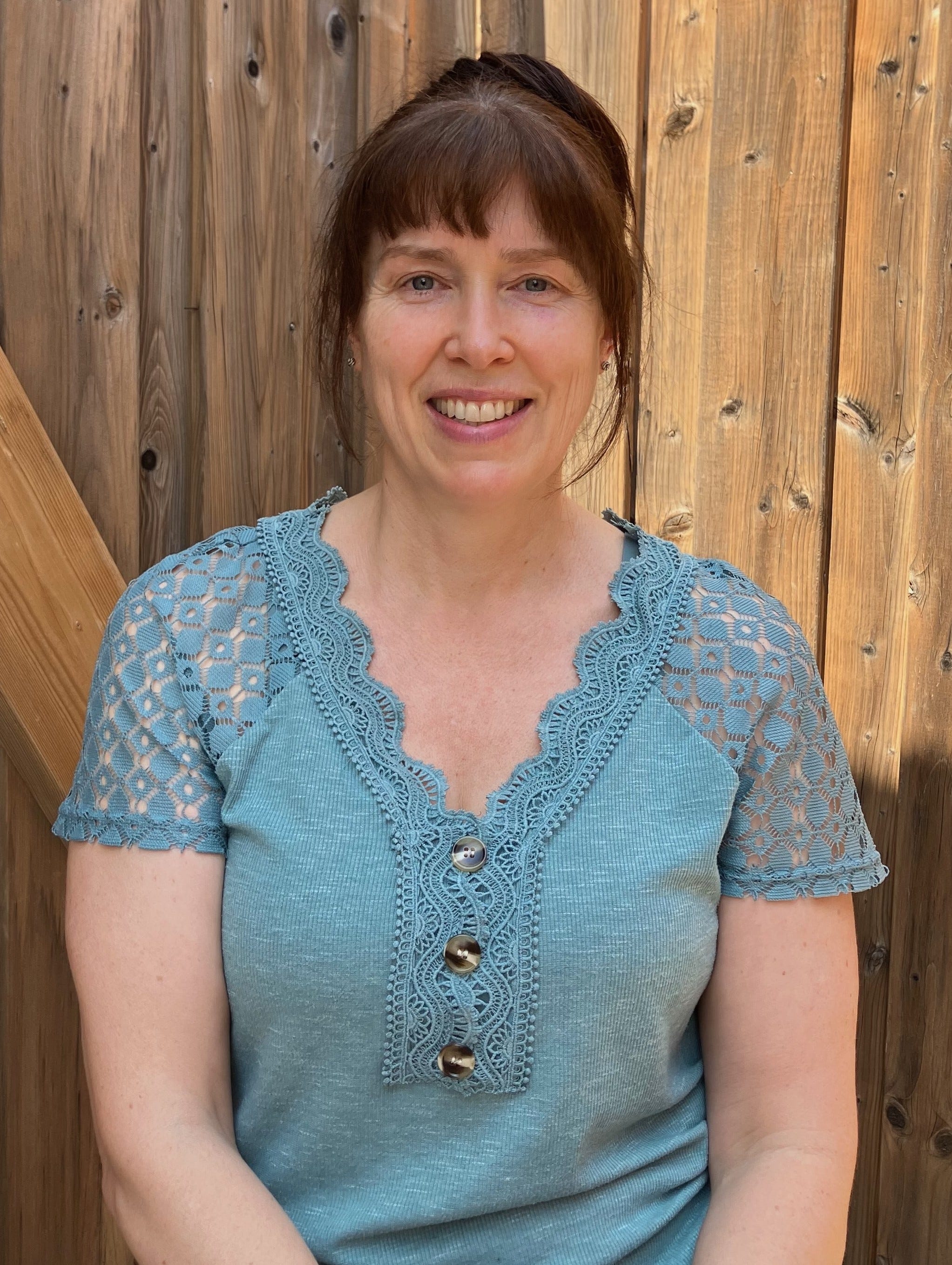
Barbara, you recently had a writers’ craft piece published on Brevity Blog. Is this the first time you’ve written about the act of writing? What gave you the idea to do so?
Yes, this is the first time I’ve written specifically about writing. I was inspired by reading the Brevity blog itself and other craft blogs. The wisdom, humour, and insights shared by other authors have helped me along my writing journey, and I wondered if I had something to offer that might benefit someone else.
Did writing a piece about writing pose any unique challenges?
I’m primarily a fiction writer so shifting to nonfiction is always an adjustment, but addressing other writers was particularly daunting. I had to silence the inner voice that told me they were all further along in their careers than I was, that they wouldn’t relate. I had to believe I wasn’t the only one with these experiences.
Do you have any tips for others who are trying to write or publish craft essays?
For inspiration, read widely. Sign up for blogs, Substacks, newsletters—read as many reflections and craft essays as you can. Get to know what’s out there and what you like or don’t like. What’s the vibe or spirit of a piece that resonated with you? This information can help you figure out the types of pieces you’d like to write. I’m particularly interested in pieces that encourage me. Writing can feel so solitary, and motivational pieces give me a boost and help me feel more connected to other writers.
Are there any books or essays about writers’ craft that you find particularly useful?
I’m a big believer that to be a better writer I need to read. Read, read, read. I will go into a bookstore and grab a random book off the shelf, and I’m sure I’ll learn something from it. For craft books, I really like The Plot Whisperer: Secrets of Story Structure Any Writer Can Master by Martha Alderson, and Make a Scene: Writing a Powerful Story One Scene at the Time by Jordan Rosenfeld. I’ve recently been enjoying a nonfiction anthology called The Shell Game, edited by Kim Adrian, that has great examples of borrowed forms. I think this would be useful to anyone exploring new forms for personal essays.
Is there anything else you’d like to tell us about the piece you wrote?
“Ride It Out: How Spin Makes Me a Better Writer” is one of the pieces I’m most proud of because it felt very honest. I finished a novel last year and have been in the querying trenches for some time, getting so close to acceptance but ultimately not quite getting there (at least not yet). I’ve tried to turn my attention to writing a new book, but honestly, it became a slog. I channelled frustration into my workouts, and it became clear I needed this same determination with writing. I’d spent so long with an editing mindset that I was struggling to get back to writing a first draft again. Teaching myself to sit through the discomfort of shifting gears has been a big help. The article was written to myself more than anyone else and based on the feedback I’ve received, others have connected with the message too.
BARBARA SUMMERS studied creative writing at the University of Toronto. She’s had short fiction published by Literary Mama and nonfiction published on Brevity Blog and at Medium.com. She’s the editor of a community newspaper, and she lives with her husband and son on the outskirts of Toronto.
Learn more about Barbara on her website: barbarasummers.ca
GAYLE BELSHER
Craft Essay: “Fiction or Nonfiction? Let’s be Honest about the Dichotomy” (PDF below)
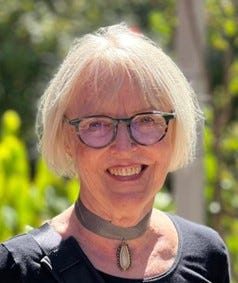
Gayle, you recently had a writers’ craft piece published in Freelance. Is this the first time you’ve written about the act of writing? What gave you the idea to do so?
Yes, this is the first I’ve written about writing. Two recent experiences sparked the idea:
The first was a KSPS PBS documentary, “Julia Alvarez: A Life Reimagined.” Years ago, I had read some of her early work, notably How the Garcia Girls Lost Their Accents and In the Time of the Butterflies. I had remembered them as poignant accounts of how she and her sisters adapted to life in the United States after escaping the brutal dictatorship of Trujillo in the Dominican Republic (Garcia Girls) and how the dictator’s henchmen had murdered three sisters (Time of Butterflies) who had been active in an underground resistance movement. Watching the documentary in which two of Julia’s sisters were interviewed, I was surprised to hear that both books were novels. Immediately after the PBS viewing, I pulled Alvarez’s books from my bookshelf to see how I had misconstrued them as memoirs. The writing was so vivid and so closely aligned with what I knew about the political history of the Dominican Republic that I had completely forgotten the author’s preface, “based on historical facts.” In her postscript to In the Time of the Butterflies, Alvarez explained, “I wanted to immerse my readers in an epoch in the life of the Dominican Republic that I believe can only finally be understood by fiction.” And in the documentary, Alvarez stated, “A novel is the truth according to character.” The interplay of fact and fiction, and the ease with which I had confused the two in the case of Alvarez’s books, gave me pause.
The second experience is the one I referenced in the opening paragraph of my craft essay. When submitting my own work, I recently faced a choice between “fiction” and “creative nonfiction” and began asking myself where to draw the line between the two. In exploring this question, I began to consider factors affecting “nonfiction,” particularly as they relate to personal essay or memoir writing.
Did writing a piece about writing pose any unique challenges?
Yes, there were several challenges. I do not have the background or expertise to comment on writing poetry, drama, most categories of fiction, or journalistic nonfiction, so I needed to be careful to limit the scope of my piece to CNF memoir or personal essay. Since both rely heavily on the narrator’s sensations, perceptions and memories, my Psychology background seemed quite relevant. But whole courses are devoted to each of these areas of human experience, so I had to select what would be most meaningful and most accessible to readers with an array of academic backgrounds different from mine. I am less than two years into retirement from my career as a clinical psychologist, and I am a relative novice in the world of creative writing, so I wanted to strike a tone of inquiry rather than expertise. This is a different authorial stance than in academic publications, where readers expect knowledge to be communicated with a certain degree of authority, often with an associated statistical probability of reliability (or “truth”), as is the case in the quantitative research I had done. Lastly, I have attended enough creative writing courses and workshops to know that CNF writers hold widely varying views on how “creative” we can be with CNF. As such, I needed to keep the self-doubt – Who am I to say anything new about this? – somewhat at bay.
Do you have any tips for others who are trying to write or publish craft essays?
A craft essay requires substantial effort to write, so it is probably a good idea to submit a pitch to a journal before investing the time and energy in a finished product. I started with a pitch to Freelance. The contract for an essay of a specified word count helped determine the scope and focus of the piece. I tried to approach the writing with a balance of confidence and humility. Many generations of writers before me have thought about the question of fiction vs. nonfiction, so I read widely on the topic and tried to incorporate relevant ideas from others, while also striving to add something new that I hadn’t encountered before. I belong to a small group of beta readers and asked them for feedback before submission. As always, I believe one should write to the best of one’s ability, allowing for “away time” between revisions. Some combination of these things appeared to work, and I was pleased that Freelance requested no changes to my original submission.
Are there any books or essays about writers’ craft that you find particularly useful?
With respect to CNF specifically:
Prentiss, S. and Nelson, J.H (2021). Advanced Creative Nonfiction. A Writer’s Guide and Anthology. Bloomsbury.
Miller, B. and Paola, S. (2019). Tell It Slant. Creating, Refining, and Publishing Creative Nonfiction. McGraw-Hill.
On writing in general:
Rooke, C. (ed.) (2006). Writing Life. Celebrated Canadian and International Authors on Writing and Life. McClelland & Stewart.
Alison, J. (2019). Meander, Spiral, Explode. Design and Pattern in Narrative. Catapult.
Is there anything else you’d like to tell us about the piece you wrote?
Ironically, perhaps, I think one of the best times to write about craft is when one is learning it. During the early phases of a new endeavour, many things need attention, small things sometimes, things that mature practitioners probably would take for granted. I’ve noticed this in other areas, such as beginning to practice yoga or learn guitar. “Beginner’s mind” is a Zen Buddhist concept that stresses an attitude of openness, curiosity, and nonjudgment – a frame of mind that may come more naturally to a beginning writer than a seasoned writer whose experience allows them to execute certain aspects of the craft more easily.

GAYLE BELSHER lives in Calgary, where she has recently retired from a long career as a clinical psychologist. Her creative nonfiction writing, which often centers on family and place, has appeared in The Globe and Mail, Folklore Magazine, and most recently, Freelance. She is a student in the Creative Writing Certificate Program at the University of Toronto, and when not writing, dedicates herself to Spanish, yoga, and classical guitar.
Some Publications that Accept Nonfiction Craft Essays
Below is just a short list to get you thinking. Don’t forget about your local writing groups, arts organizations, and unions too. Many have magazines that publish craft-related articles and essays.
Assay (for critical scholarship on CNF)
Some Upcoming Opportunities
Fiddlehead’s annual CNF Contest is open for entries of up to 6,000 words. The deadline is June 1.
Room’s Creative Nonfiction Contest is open until June 15 for entries of up to 3,500 words.
The general submission period for Fourteen Hills is open until June 15 for CNF of up to 6,000 words.